What is manual therapy?
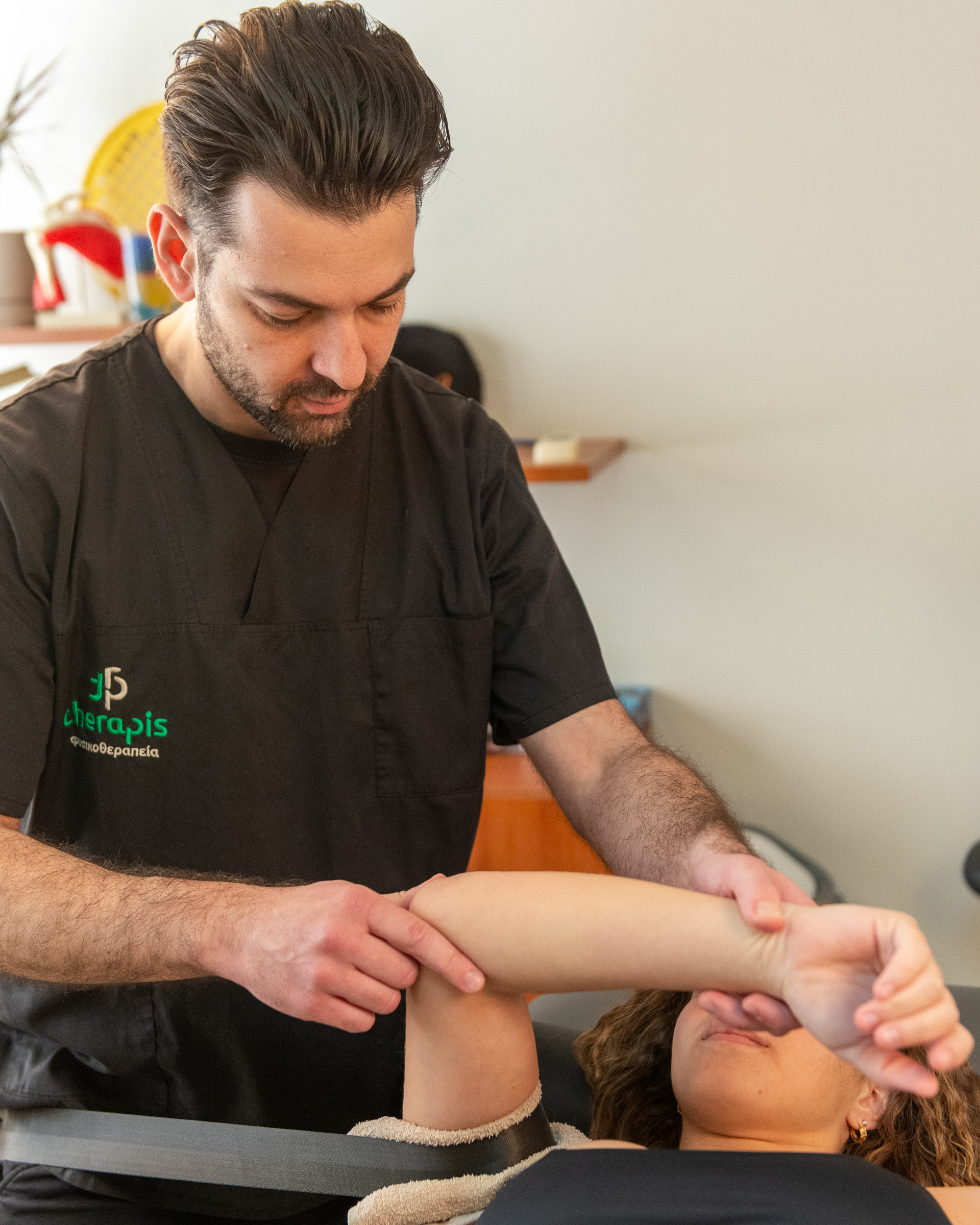
A therapeutic approach primarily based on the use of hands to treat musculoskeletal pain and various deficits following injury. It is applied by specialized and highly trained physiotherapists as part of a comprehensive rehabilitation plan, guided by clinical reasoning and evidence-based practice. Manual Therapy includes various techniques such as:
- Mobilizations: A specialized technique developed by Australian physiotherapist Geoffrey Maitland, classified into five grades depending on the range and point of application within the movement arc. The first four grades consist of gentle, repetitive joint movements aimed at improving range of motion, and reducing stiffness and pain.
- Manipulation (HVLA / Thrust): The 5th Maitland grade, involving a fast, precise high-velocity, low-amplitude movement. It is often accompanied by a characteristic “crack” sound during application, although this is not necessary for the technique to be successful. It aims to immediately restore joint mobility and reduce pain through neurophysiological mechanisms.
- Soft Tissue Techniques: Techniques targeting muscle relaxation and reducing tension or adhesions.
- Mobilization with Movement (MWM): A technique developed by physiotherapist Brian Mulligan and a core component of the Mulligan Concept philosophy. It combines therapist-applied manual techniques with simultaneous active movement by the patient to achieve immediate pain reduction and improved range of motion.
- Neurodynamic Mobilization (Neurodynamic Movements): Improves the mobility and function of the nervous system through specific, controlled movements applied both passively by the therapist and actively by the patient.